Written By: Gretchen Barrett
In July 2013, a Boeing 777 crashed while landing at San Francisco International Airport. The aircraft approached too low and too slow, ultimately striking the seawall before the runway. The investigation by the National Transportation Safety Board found that cockpit design was a critical contributing factor. When cockpit controls or systems are unclear, even experienced pilots can make the wrong decision under pressure.
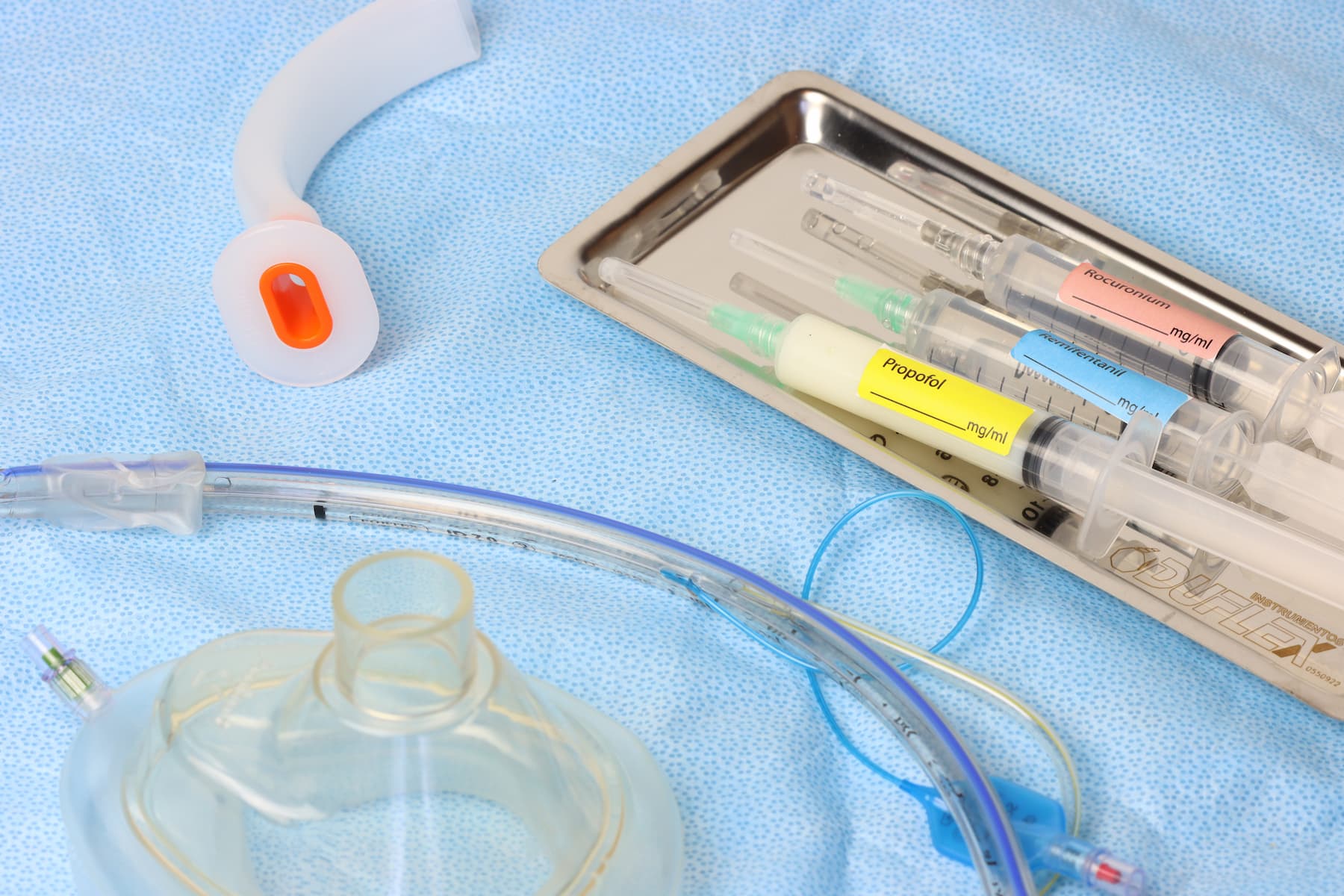
Veterinary surgical teams face a similar challenge. In the "cockpit" of an operating room, they're working with syringes and IV lines prepared with high risk medications. In the moments leading up to and during surgery, multiple medications may be drawn, labeled, and placed onto a tray by one team member and administered by another. When labeling is inconsistent, handwritten, or difficult to read, even highly skilled clinicians are forced to slow down, double-check, or rely on memory. In an environment where precision and speed must coexist, that friction introduces risk.
Developing a standardized syringe and IV line labeling system supports rapid, accurate decision-making, reduces cognitive load, and helps veterinary teams maintain clarity throughout every stage of a procedure.
Key Takeaways
- Inconsistent anesthesia tray labeling increases risk. Multiple syringes, similar-looking medications, and unclear labeling create opportunities for medication swaps and dosing errors.
- Standardized labeling reduces cognitive load. Clear, consistent syringe and IV line and tubing labels allow veterinary teams to quickly identify medications without relying on memory or interpretation.
- Surgical handoffs become safer with clear labeling. When medications are prepared by one clinician and administered by another, standardized labels ensure continuity and reduce uncertainty.
- Durable labels are essential in surgical environments. Labels must withstand any liquid exposure, and frequent handling to remain readable throughout procedures.
- Color coding improves speed and accuracy. Differentiating medication classes by color enables faster visual recognition, especially in time-sensitive situations.
- Pre-printed labels and tapes with drug names, concentrations, and timing eliminates variability, reducing reliance on handwritten notes.
- Tray organization enhances workflow clarity. Assigning consistent zones and label placement on anesthesia trays helps clinicians locate and confirm medications quickly.
- Standardization supports training and scalability. Veterinary hospitals with multiple clinicians benefit from consistent labeling systems that reduce variability and simplify onboarding.
- Improved labeling leads to more efficient procedures. Faster medication identification minimizes interruptions and supports smoother surgical workflows.
The Hidden Risks of Inconsistent Anesthesia Tray Labeling
Even in highly skilled veterinary teams, small inconsistencies in labeling can introduce avoidable risks. These issues often go unnoticed until they disrupt workflow, or worse, contribute to an error.
Medication Swaps During Preparation
When multiple syringes are prepared at once, the risk of misidentification increases significantly. Many anesthetic drugs share similar appearances. For example, Propofol, an injection used for anesthesia induction, is often confused with Propantheline, a gastrointestinal agent.
Another challenge is the potential for mixups between human and pet medications. Drugs including corticosteroids, chemotherapeutics (like doxorubicin), and various antibiotics are examples.
Proper labeling, including look alike sound alike labels, helps mitigate these risks by providing clear, specific information tailored to veterinary needs.
Confusion During Surgical Handoffs
The individual preparing medications is not always the one administering them. During handoffs between technicians, veterinarians, or surgical staff, unclear labeling increases the risk of improper administration. Pausing to verify a syringe interrupts workflow and introduces additional opportunities for error.
Abbreviation and Handwriting Issues
Handwritten labels can be hard to read and become illegible after handling. Abbreviations may vary between clinicians, introducing ambiguity. Over time, these inconsistencies force clinicians to interpret rather than recognize, contributing to dosage errors or incorrect medication selection.
Learn best practices for medication and pharmacy labeling.
Why Label Durability Matters in Surgical Environments
Even the most well-designed labeling system can fail if the labels themselves can't withstand the realities of a surgical setting. Durability is essential to maintaining clarity from preparation through administration.
Exposure to Fluids and Cleaning Solutions
Alcohol wipes, saline, and other fluids are common in surgical workflows. Labels must resist smudging and deterioration when exposed to these elements. If a label curls or detaches, it can compromise medication identification at the worst possible time.
Frequent Handling and Tray Organization
Anesthesia trays are not static. Syringes are repositioned, trays are adjusted, and lines may shift throughout a procedure. Labels must remain securely adhered and clearly visible regardless of handling or movement, ensuring consistent readability.
Designing a Standardized Anesthesia Tray Labeling System
Creating a safer anesthesia tray starts with a standardized design. This ensures that every team member interacts with medications in a consistent, predictable way.
High-Visibility Syringe Labels
Clear labeling allows clinicians to instantly identify medications. Using high-contrast text, clear, legible fonts, and streamlined information provides instant clarity and minimizes the need for verification.
Equally important is consistency in placement. Labeling every syringe consistently ensures clinicians know exactly where to look, preventing unnecessary searching or repositioning.
Color Differentiation for Medication Classes
Color coding provides an additional layer of visual recognition, enabling clinicians to quickly distinguish between medication classes. In time-sensitive situations, color becomes a powerful cue that supports faster decision-making and lowers cognitive load during emergencies.
Aligning color schemes with commonly accepted anesthesia protocols further reinforces consistency and reduces the learning curve for new staff.
Pre-formatted Medication Labels
Pre-printed labels eliminate the need for handwritten notes and ensure that information including drug name, concentration, and time, is consistently documented. This approach ensures consistency and simplifies the process for the entire staff.
Tray Level Labeling Organization
Standardization extends beyond individual labels to the layout of the anesthesia tray itself. Assigning consistent zones for medication types and ensuring uniform label placement helps clinicians quickly locate and confirm medications. This structured approach reduces search time and improves workflow during procedures.
Adopting Standardized Labeling in Growing Veterinary Hospitals
As veterinary practices expand, consistency becomes more difficult to maintain without clearly defined systems. Standardized labeling provides a foundation for scalable, reliable processes.
Reducing Clinician Variability
Different clinicians often bring different habits and preferences. Standardized labeling formats and protocols create alignment across teams, ensuring that every provider follows the same safety practices regardless of shift or role.
Improving Training and Onboarding
New technicians and staff benefit from clear, repeatable systems. Standardized labels reduce reliance on informal, experience-based practices and help new team members quickly integrate into surgical workflows with confidence.
Supporting Surgical Workflow Efficiency
When labels are clear and consistent, clinicians can identify medications faster and with greater certainty. This reduces interruptions, streamlines procedures, and supports smoother handoffs between team members.
Why Veterinary Surgical Teams Trust United Ad Label
Selecting the right labeling system is critical to developing a safer anesthesia tray system. United Ad Label provides solutions specifically designed for the demands of veterinary surgical environments.
UAL's veterinary anesthesia labels are engineered to withstand the rigors of surgical settings. High-visibility formats ensure rapid identification, while durable materials maintain integrity throughout the procedure.
With both stock and custom options available, UAL helps veterinary hospitals build standardized labeling systems tailored to their workflows, improving safety and reducing errors. Contact us to learn more.
Frequently Asked Questions
How do veterinary hospitals prevent anesthesia medication mix-ups?
Veterinary hospitals reduce anesthesia medication mix-ups by using standardized syringe and IV line labeling systems. Clear labels, color coding, consistent tray organization, and pre-formatted medication fields help clinicians quickly identify medications and reduce reliance on memory during procedures.
Why is syringe labeling important during veterinary surgery?
Syringe labeling is important because veterinary surgical teams often prepare multiple anesthetic medications at once. Clear labeling helps prevent medication swaps, dosage errors, and confusion during surgical handoffs where multiple clinicians may handle the same anesthesia tray.
What should be included on veterinary anesthesia syringe labels?
Veterinary anesthesia syringe labels should clearly identify the medication name, concentration, dosage information, preparation time, and clinician initials when appropriate. Labels should remain readable throughout the procedure despite handling and fluid exposure.
Why is anesthesia tray organization important in veterinary surgery?
Well-organized anesthesia trays improve medication visibility, reduce search time, and support faster decision-making during procedures. Consistent organization also improves communication between veterinarians, technicians, and anesthetists during surgical handoffs.
Written by: Gretchen Barrett:
Gretchen serves as a Product Manager for United Ad Label. With over 25 years of experience in the shipping and transportation, healthcare and veterinary industries, she specializes in developing solutions that meet rigorous regulatory standards while streamlining workflow efficiency. Outside of her professional roles, she enjoys reading, attending sporting events and spending time with friends and family.