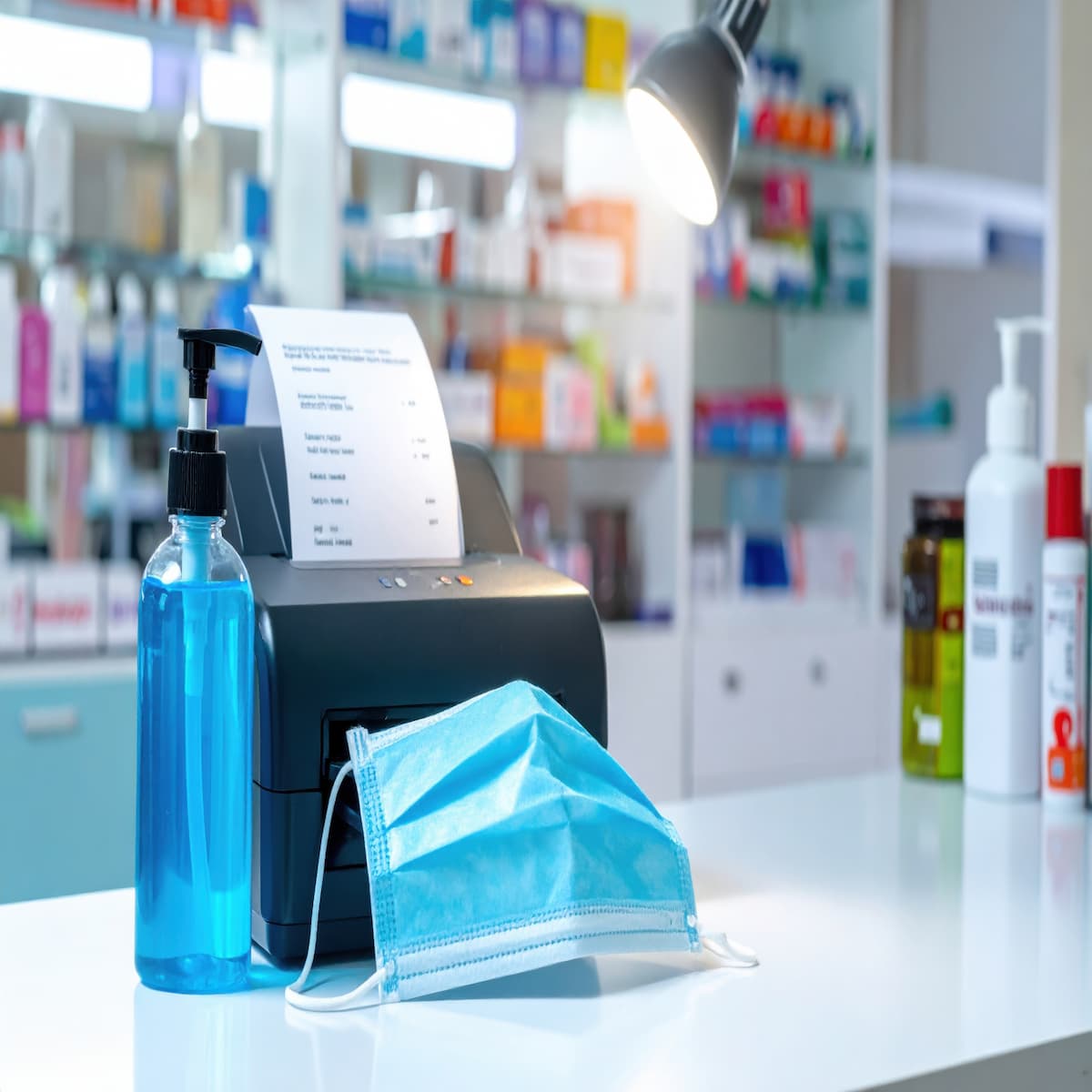
Solving Healthcare Label Waste with Standardized Thermal Printing Programs
Healthcare organizations depend on accurate labeling to support everything from specimen collection and medication preparation to patient identification and inventory management. But when thermal printing systems vary across departments or facilities, the result is often inconsistent label quality, unnecessary inventory complexity, printer compatibility problems, and workflow inefficiencies that impact both staff productivity and patient safety.
Standardized thermal printing programs help healthcare systems create reliable, repeatable labeling processes by aligning printers, label formats, materials, and workflows across the organization.
Key Takeaways
- Standardized thermal printing programs help healthcare organizations improve consistency across laboratory, pharmacy, and clinical workflows.
- On-demand thermal printing reduces obsolete pre-printed inventory and minimizes material waste when procedures or regulations change.
- Label standardization can reduce barcode scan failures, printer troubleshooting, workflow delays, and training complexity across facilities.
- Durable thermal labels are essential in healthcare environments where labels are exposed to refrigeration, disinfectants, moisture, and curved surfaces like syringes and vials.
- Healthcare organizations should evaluate thermal printing supplies based on durability, adhesive performance, material flexibility, and print clarity.
- Working with a knowledgeable healthcare labeling partner can help healthcare systems consolidate SKUs, improve fulfillment reliability, and support compliance-related workflows.
The Role of Standardized Thermal Printing in Healthcare Efficiency
Standardized thermal printing programs are closely tied to the evolution of electronic health records (EHRs). Widespread EHR adoption accelerated after the 2009 HITECH Act introduced financial incentives for meaningful use, driving hospitals to digitize clinical documentation, lab workflows, and pharmacy systems.
As EHRs expanded, specialized components such as Laboratory Information Systems (LIS) and Pharmacy Information Systems (PIS) emerged to support healthcare workflows. By leveraging on-demand thermal printing, these systems ensure critical labels are generated at the precise moment of specimen collection or medication preparation — driving both accuracy and efficiency.
What Are Standardized Thermal Printing Programs?
A standardized thermal printing program provides:
- Consistent label formats for labs, pharmacies, and clinical areas
- Printer-compatible media aligned with LIS and PIS requirements
- Centralized SKU management across departments and facilities
- Durable materials designed for clinical environments
Instead of stocking dozens of different labels, healthcare teams print what they need, when they need it.
Reducing Pre-Printed Waste
Processes often vary across departments. When departments rely on pre-printed or specialized items, and clinical protocols change or regulations shift, obsolete inventory and wasted materials are often the result. On-demand thermal printing eliminates this issue.
Labels are printed only when required, reducing disposal of outdated inventory and improving data accuracy at the bedside, lab, and pharmacy counter.
Mitigating Operational and Financial Risks
Inconsistent labeling creates hidden costs that impact staff performance and patient safety:
- Barcode scan failures due to poor print quality or incompatible materials
- Slowed workflows as staff troubleshoot printer jams or reprint labels
- Higher error risk during specimen handling, medication preparation, and handoffs
- Increased training burden when formats differ by location
Standardization reduces these risks by creating predictable, repeatable labeling processes.
Ensuring Durability in Demanding Environments
Healthcare labels — especially those in the lab and pharmacy — must withstand demanding conditions. Durable thermal labels properly matched to the application ensure barcodes scan reliably, text remains legible, and the label stays secure throughout its lifecycle.
Labels must maintain adhesion and print clarity through temperature extremes in specimen storage and cold-chain medication workflows.
Frequent exposure to cleaning agents and disinfectants requires materials that resist smudging, fading, and adhesive breakdown.
Medication preparation areas involve repeated handling; labels must stay legible and secure under constant contact.
Syringes and vials require flexible label materials that conform tightly to small diameters without lifting or wrinkling.
Improving Clinical Workflows Through Label Standardization
Label standardization not only reduces waste — it directly improves clinical efficiency.
Fewer SKUs, Simpler Ordering
Unified label formats across facilities reduce the number of SKUs required in the operation. This makes procurement more predictable and reduces the risk of stocking incompatible supplies. Centralized purchasing also improves inventory visibility, simplifies replenishment, and lowers cost.
Reliable Zebra-Compatible Performance
Standardized, Zebra Technologies-compatible thermal labels help prevent:
- Printer jams caused by inconsistent liners or adhesives
- Misaligned printing that affects barcode placement
- Compatibility issues between departments using similar hardware
When printers perform consistently, staff can devote their time to the patient — not troubleshooting printer issues.
Precision Labels for Labs and Pharmacies
Custom pharmacy and laboratory label formats support accurate specimen identification and tracking, clear medication labeling with required data fields, and reliable patient identification throughout care workflows. Standardized formats ensure that critical information appears in the same location every time, increasing consistency and accuracy.
Choosing Effective Thermal Printing Supplies
Not all thermal labels are created equal. Healthcare leaders should evaluate materials based on four key criteria:
Moisture-resistant and chemical-resistant options are essential to prevent smudging or peeling in clinical environments.
The adhesive must bond reliably to the surfaces common in lab and pharmacy applications, including plastic, glass, and stainless steel.
The material must accommodate the curved surfaces and small diameters common with syringes and vials.
High-contrast thermal printing is vital for the small, high-density barcodes used on syringes and specimen vials.
Linerless Labeling — Use Where Supported
Linerless thermal labels can reduce waste and increase roll length, minimizing roll changes during high-volume periods. However, compatibility varies by LIS and PIS platform, so check system and printer compatibility before considering linerless formats.
Stocking Standardized Formats
Maintaining a core set of standardized label sizes and formats supports point-of-care printing, faster onboarding of new staff, and reduced reliance on pre-printed inventory.
Where Healthcare Systems Should Source Standardized Labels
A successful program requires a partner that understands the nuances of patient safety and supply chain management. A reliable partner should offer:
Knowledge of USP, Joint Commission, and CMS requirements to ensure every label supports compliance.
Deep expertise in ensuring labels perform flawlessly on the hardware healthcare teams depend on.
The ability to audit current label usage and consolidate SKUs across departments and facilities.
Fast turnaround and consistent inventory to prevent stock-outs during demand surges.
For multi-facility systems, working with a single knowledgeable vendor ensures that a label printed in a satellite clinic is identical in quality and format to one printed in the main hospital.
Choose UAL for Standardized Healthcare Thermal Printing Programs
United Ad Label serves as a strategic partner for healthcare organizations looking to move beyond simply buying labels toward a comprehensive labeling strategy. By adopting UAL's Zebra-compatible supplies, systems can establish a reliable foundation for patient safety and operational clarity.
Frequently Asked Questions
What is a standardized thermal printing program in healthcare?
A standardized thermal printing program aligns label formats, materials, printers, and workflows across healthcare departments or facilities. These programs help ensure labels print consistently and reliably for laboratories, pharmacies, specimen collection, medication preparation, and patient identification.
Why are thermal labels important in hospitals and healthcare systems?
Thermal labels support accurate patient identification, medication labeling, barcode scanning, and specimen tracking. Reliable thermal printing helps healthcare organizations improve workflow consistency while reducing labeling errors and operational disruptions.
How does standardized labeling improve healthcare efficiency?
Standardized labeling reduces SKU complexity, minimizes printer compatibility problems, simplifies staff training, and improves ordering consistency across facilities. It also helps reduce workflow interruptions caused by poor print quality or incompatible label materials that cause printer jams.
What types of healthcare labels require durable thermal materials?
Laboratory labels, pharmacy labels, specimen labels, and refrigerated medication labels often require durable thermal materials capable of resisting chemicals, moisture, disinfectants, refrigeration, and frequent handling.
What should healthcare systems look for in thermal printing supplies?
Healthcare organizations should evaluate thermal printing supplies based on material durability, adhesive integrity, flexibility for curved surfaces, and print clarity for the small, high-density barcodes commonly used in healthcare settings.