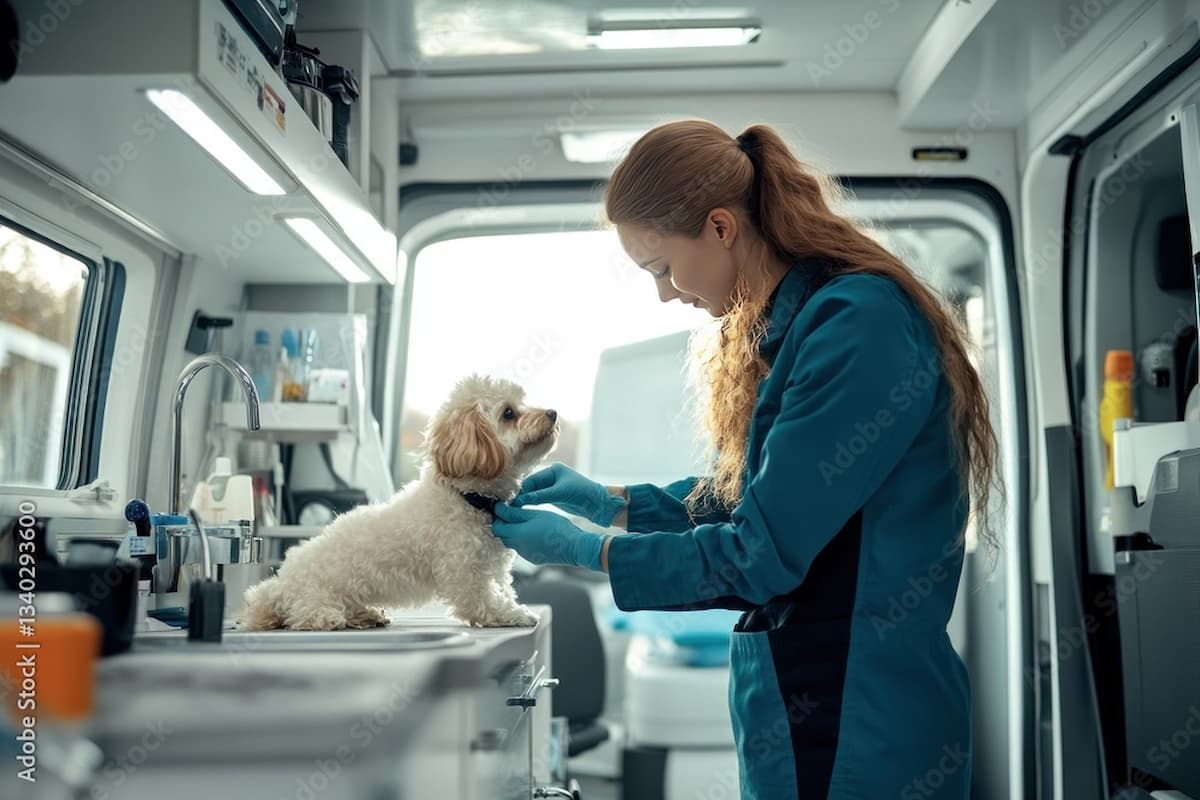
Do you remember when two-day shipping felt fast? Now, we expect packages and services almost instantly. Pet owners are no different. Mobile veterinary clinics are rising to meet this demand, offering on-site exams, treatments, and even surgeries that spare pets the stress of travel and long waits. Yet behind the convenience lies a hidden complexity: labeling medications, samples, and instructions accurately in a mobile environment.
Key Labeling Needs for Mobile Vet Clinics
Even in a standard veterinary setting, labeling is a challenge. Condensation, frequent handling, refrigeration, and varied surfaces all create conditions where labels can fail without the right materials and adhesives. In mobile clinics, these challenges multiply. Temperature and humidity are harder to control, and fur and dust accumulate more easily, which makes durable, flexible, and secure labels essential for maintaining accuracy and compliance.
Every label must clearly communicate critical information while withstanding the realities of mobile practice. Selecting the right material, adhesive, and printer-compatible formats ensures labels stay secure, legible, and ready wherever care is delivered.
Essential Information for Every Label
Just like a brick-and-mortar veterinary practice, labels are essential for prescriptions, medication instructions, lab testing, and more.
Prescription Labels
Whether preprinted or computer-generated, prescription labels should contain seven distinct categories ranging from the veterinary practice name and contact info to directions for use and reorder details.
Medication Instruction Labels
Medication instruction labels guide both the staff and the patient. Patient-focused instructions such as “refrigerate” or “give with food” help ensure efficacy. For the staff, date opened/beyond-use date and hazardous drug warning labels keep the practice safe and compliant.
Lab Labels
Although lab testing for blood counts, urine analysis, fecal screenings, and rapid tests for parasites or diseases typically occur within the mobile unit, more complex or specialized tests are sent to reference laboratories. A lab label is essential to ensure accurate patient identification, prevent mix-ups, and provide other important information about the specimen.
GHS Labels
If you handle hazardous chemicals, like isoflurane, nitrous oxide, or other hazardous chemicals, GHS labels are required for compliance. They communicate specific warnings to help workers understand proper handling and take the protective measures necessary to guide safe use.
Challenges in Mobile Settings
Mobile environments add complexity, but planning helps mitigate issues:
- Overcoming Space Constraints: Mobile units can’t store bulk supplies. Using compact label rolls and multi-use formats maximizes efficiency.
- On-the-Go Printing: Portable, direct thermal printers paired with compact label rolls let vets print labels instantly in the field.
- Environmental Exposure: Heat, cold, humidity, dust, and fur all impact label performance. Selecting the proper label material and adhesive is critical.
Choosing the Right Materials and Adhesives
Mobile veterinary clinic workflows require label materials and adhesives that meet specific conditions. For example:
Pharmacy and Medication Instruction Labels
Use glove-safe adhesives that can withstand refrigeration or freezing without peeling.
Lab Labels
Specimens encounter temperature extremes, handling, and analyzer rigors. Some labels must withstand temperatures ranging from -51°C to 93°C (-6°F to 200°F).
Chemical Exposure
From disinfecting surfaces to cleaning devices, mobile veterinary practices use cleansers to minimize the presence of bacteria. Labels not designed for chemical exposure can cause ink to smear or labels to detach, making crucial data unreadable.
UAL can recommend label materials the match your exact environment and portable printer model.
Compliance and Safety Regulations
Even on the road, mobile veterinary practices must meet the same standards as traditional clinics.
- FDA, State, and Local Labeling Requirements: Prescription labeling must include all legally mandated details.
- Secondary Containers: Any medication or chemical transferred to another container must be clearly labeled. It’s a requirement of the Globally Harmonized System of Classification and Labeling of Chemicals (GHS).
- Look-alike, Sound-alike (LASA) Drugs: LASA errors remain a persistent threat. Using Tall Man Lettering, such as hydrALAZINE and ATRAcurium, draws attention to differences that can prevent a dangerous substitution.
- Anesthesia Labeling: Inaccurate dosing is a leading cause of anesthesia errors. A recent study found 40% of medication errors occurred because of inaccurate dosing. Highlighting the proper fill line on a vial or syringe increases dispensing accuracy.
Workflow Tips for Mobile Vets
The limited space available in a mobile vet unit makes it essential to utilize it effectively. Efficient labeling processes can save valuable time in the field.
Medications
- Label shelves with unique drug categories to ensure staff knows where to place each item.
- Store controlled substances in a separate secured area.
- Use beyond-use date labels to identify drug expiration dates.
- Apply medication instruction labels for drugs that require special handling.
Supplies (Color Coding)
- Green: Stock is at an appropriate inventory level.
- Yellow: Nearing the point of reorder.
- Red: On reorder.
Keep your vehicle stocked and organized
Before heading out, ensure you have the necessary forms, labels, and supplies for the day's appointments. An organized vehicle minimizes downtime and maximizes client time.
How UAL Supports Mobile Clinics
United Ad Label understands the unique demands of mobile practices. We provide:
- Durable Veterinary Labels - Engineered to withstand challenging conditions.
- Dymo-Compatible & Printer-Friendly Rolls - Designed for portable printers in mobile clinics.
- Custom Label Solutions - Featuring your clinic’s logo, warnings, or unique messaging.
- Fast Stock Fulfillment - To ensure you never run out while on the road.
Mobile veterinary clinics deliver convenience and high-quality care, but they can’t afford to cut corners with labeling. United Ad Label provides durable, printer-compatible, and customizable solutions tailored to the realities of mobile practices, allowing your team to focus on patient care. Contact us to learn more.